
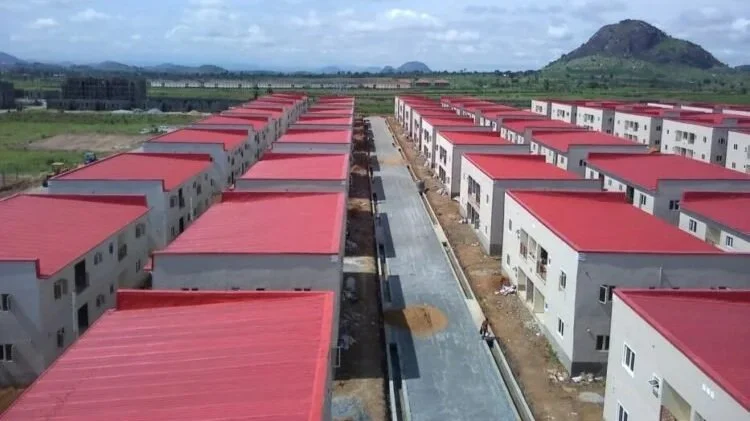
Tinubu Administration Speeds Up Abuja Military Housing Project for Troops
The Federal Government has intensified efforts to fast-track the completion of a 1,550-unit housing project for Nigerian military personnel in Abuja, as part of broader initiatives to improve troop welfare and strengthen security sector support. The housing development, being implemented under the Renewed Hope Housing Programme, is expected to provide modern accommodation for members of the armed forces and their families within a purpose-built residential estate.
Government Push for Faster Completion
The Minister of Housing and Urban Development, Ahmed Musa Dangiwa, recently inspected the project site and confirmed that construction has been accelerated following directives from President Bola Tinubu. The administration has reportedly set a timeline of two to three months for completion, with commissioning expected before the end of March or early April 2026.
Officials say the project forms part of the government’s broader strategy to enhance the welfare and operational readiness of military personnel.
According to the housing ministry, improved accommodation will enable troops to focus more effectively on national security responsibilities while living in organised and secure residential communities.
Estate Design and Housing Units
The Abuja military housing estate comprises one-, two- and three-bedroom bungalow units designed to accommodate different ranks and categories of personnel.
The development is being constructed by Brains and Hammers Estate Development Company, working in collaboration with the Federal Ministry of Housing and Urban Development and the Federal Housing Authority.
Government officials note that the estate is designed as a fully integrated residential community, incorporating essential infrastructure and social facilities for residents.
Integrated Infrastructure and Community Facilities
Beyond residential buildings, the housing estate includes a range of supporting facilities intended to create a functional and self-sustaining community.
Planned infrastructure within the estate includes:
Fully tarred internal roads
Places of worship
Shopping outlets
Sports and recreational facilities
An officers’ mess
Schools and healthcare facilities
A fire service station
In addition, authorities are constructing a 6.5-kilometre dual carriage access road linking the estate to the Kubwa Highway, which is expected to improve accessibility and open the surrounding corridor for further development.
Officials note that the new road has already begun attracting private real estate development within the area.
Addressing Military Accommodation Challenges
The initiative reflects longstanding efforts to improve accommodation for members of Nigeria’s armed forces.
Military personnel in many parts of the country have historically faced housing shortages and ageing barracks infrastructure. The Abuja project aims to revive the traditional barracks system by providing modern, secure housing communities designed specifically for service members.
Experts note that stable housing conditions contribute directly to troop morale, operational efficiency, and family welfare.
Broader Housing and Urban Development Implications
Beyond troop welfare, the project also aligns with wider government housing and infrastructure objectives.
Public-sector housing developments of this scale can stimulate economic activity by generating employment during construction, supporting local suppliers, and encouraging complementary commercial services within surrounding areas.
Urban planners also suggest that purpose-built housing for essential workers including security personnel can reduce pressure on private rental markets in major cities such as Abuja.
Outlook
With construction progressing rapidly, the Abuja military housing estate is expected to become one of the largest purpose-built residential developments for Nigeria’s armed forces in recent years.
If completed within the projected timeline, the 1,550-unit project will mark a significant milestone in the government’s effort to strengthen military welfare while expanding housing infrastructure under the Renewed Hope agenda.
