
NDDC Inaugurates Verification Committee to Transition Toward Digital Payment Systems
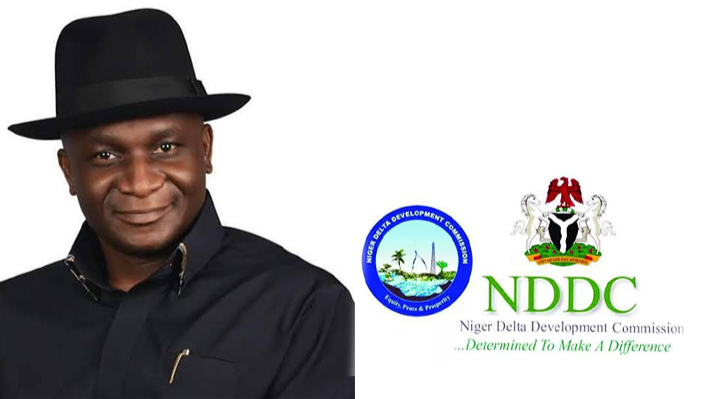
Dr Samuel Ogbuku, NDDC Managing Director
The management of the Niger Delta Development Commission (NDDC), led by Managing Director Dr. Samuel Ogbuku, has formally inaugurated a Project Verification and Payment Committee. This strategic move is designed to audit regional projects and ensure their seamless integration into the commission's newly digitized financial framework, marking a significant shift toward automated governance.
Alignment with Federal Digitalization Mandates
The establishment of this committee follows the Federal Government’s directive requiring all Ministries, Departments, and Agencies (MDAs) to achieve full digitalization and transition to paperless operations by December 31, 2025. By January 2026, the NDDC has moved to enforce these standards, ensuring that all financial claims are processed through an electronic database to enhance transparency and reduce bureaucratic delays.
According to a statement from the Director of Corporate Affairs, Seledi Thompson-Wakama, the decision was a core resolution from the 9th meeting of the commission’s 7th Governing Board. The initiative aims to eliminate the inefficiencies of manual record-keeping and provide a "single source of truth" for the commission’s project portfolio.
Scope of Project Verification
The committee is tasked with a comprehensive audit of all completed projects across the Niger Delta region from their inception up to January 2023. The verification process will cover several critical sectors to ensure they are accurately captured on the digital platform managed by the Directorate of Finance and Accounts. Key areas of focus include:
Infrastructure: Roads, bridges, and public buildings.
Energy: Electrification schemes and power distribution projects.
Environment: Remediation and desilting works to improve regional drainage.
Utilities: Water supply and sanitation projects.
Leadership and Oversight
To ensure high-level accountability, the committee is chaired by the Executive Director of Finance and Administration, Alabo Boma Iyaye. Other prominent members include the Executive Director of Projects, Sir Victor Antai, and the Director of Legal Services, Mr. Victor Arenyeka, who will serve as the committee’s Secretary.
The team also includes technical and audit experts such as Engr. Gbenga Omowanle (Project Monitoring), Mrs. Kunemofa Asu (Finance and Administration), and Mr. Lucky Ogbuji (Internal Audit). This multi-disciplinary composition is intended to provide a rigorous check-and-balance system before any payments are authorized.
NDDC’s Roadmap to Digital Transformation (2025–2026)
To comply with the Federal Government’s mandate for a paperless civil service by December 31, 2025, the Niger Delta Development Commission (NDDC) has initiated a multi-phased technical roadmap. This transition aims to replace "transactional" manual processes with a "transformational" digital ecosystem.
Phase 1: Project Verification & Data Cleaning (Q1 2026)
The first step involves a rigorous audit to ensure only legitimate projects enter the digital database.
Site Authentication: COREN-certified engineers and quantity surveyors perform on-site physical assessments to verify the status of infrastructure, water, and electrification projects.
Legacy Data Capture: Projects completed from inception through January 2023 are identified, documented, and prepared for electronic migration.
Document Validation: Verification of contractor credentials (CAC, Tax Clearance, PENCOM) and contract award letters to eliminate "fake" or non-compliant claims.
Phase 2: Digital Integration & Database Enrollment
Once verified, project data is transitioned into the Directorate of Finance and Accounts’ (DFA) digital platform.
Platform: Utilization of an Enterprise Content Management System (ECMS) for secure, paperless file management.
E-Registry: All project files, valuation certificates, and completion reports are converted into encrypted digital assets.
Unified Database: Ensuring all regional projects (across nine states) are visible on a single, centralized dashboard for management oversight.
Phase 3: Automated Workflow & E-Payment Activation
The final stage automates the "request-to-pay" lifecycle to eliminate bureaucratic bottlenecks.
GovE-Sign: Implementation of electronic signatures for departmental approvals, replacing physical file movements between offices.
E-Payment Gateway: Integration with the national e-payment regime. Payments are triggered automatically once the Project Monitoring Service confirms digital milestones.
Real-Time Tracking: Contractors and stakeholders can track the status of payments and project approvals via the digital platform, ensuring transparency and accountability.
Expected Impact by Year-End 2026
Payment Speed: Reduction in processing time from months to 24–48 hours post-approval.
Transparency: Publicly verifiable digital audit trail for all infrastructure spend.
Operational Cost: Significant reduction in stationery and physical storage expenses.
Integrity: Near-elimination of "fake" award letters and duplicate payment claims
In Conclusion
The transition to a digitized database represents a landmark reform for the NDDC, which has historically faced scrutiny over project tracking and payment transparency. By moving to an e-payment system and a paperless registry, the commission is positioning itself to regain public and investor trust. As the verification exercise commences in the first quarter of 2026, the success of this digital migration will likely serve as a benchmark for other interventionist agencies striving for fiscal discipline in the "Renewed Hope" era.
