
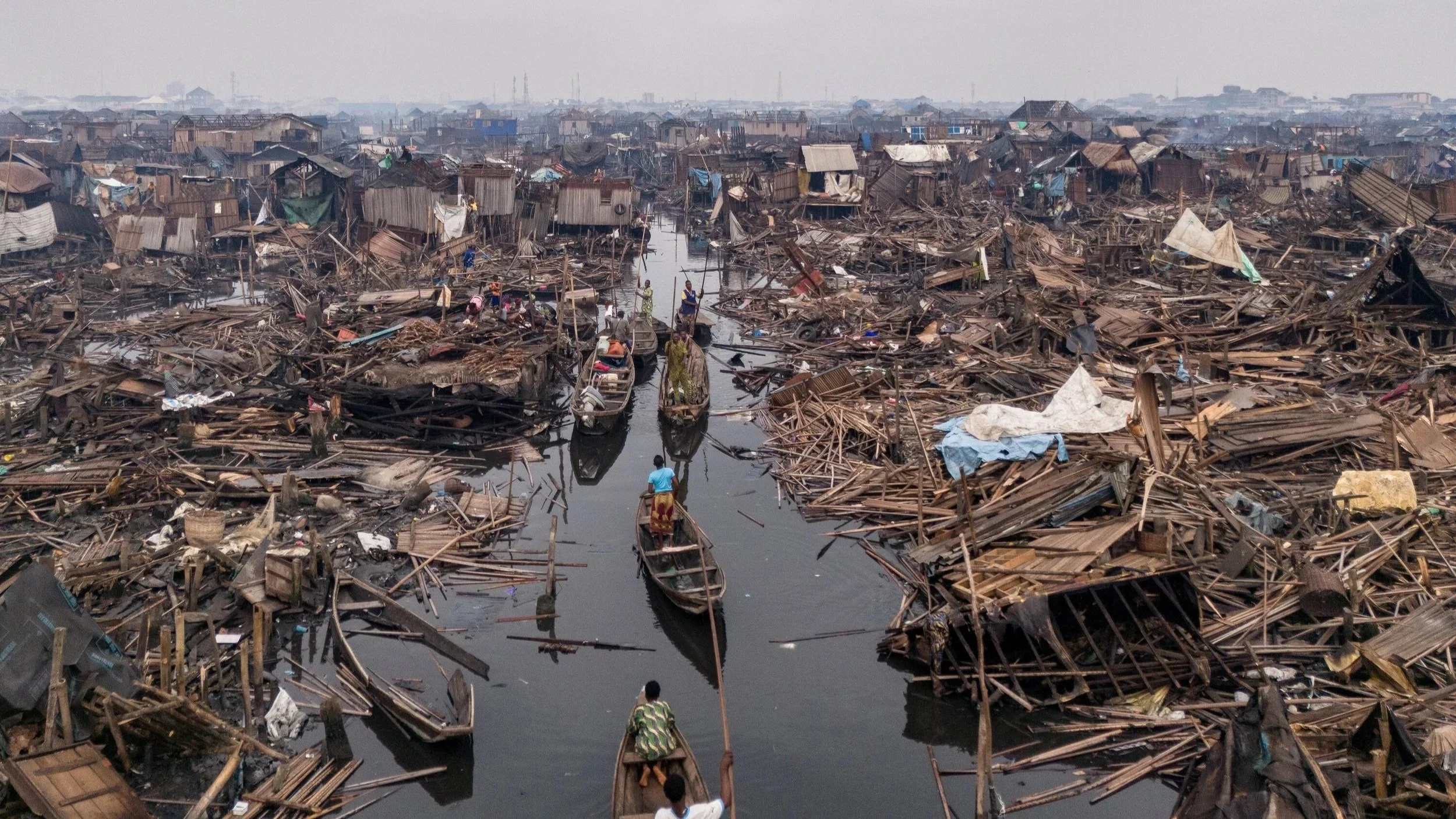
Ongoing Eviction at makoko community
More than 10,000 residents and traders across Makoko, Owode Onirin, and several waterfront communities in Lagos State have been displaced following a series of forceful evictions initiated under the government’s "urban renewal" agenda. Since 23 December 2025, demolition exercises have resulted in the destruction of over 3,000 homes and business structures, sparking a humanitarian crisis and intense debate over the state's urban planning priorities.
Scale of Displacement and Humanitarian Impact
The affected areas encompass several established informal and semi-formal settlements, including Oworonshoki, Ilaje Otumara, Baba Ijora, and the prominent Makoko waterfront. Human rights organisations and civic groups, including the EndBadGovernance Movement and Corporate Accountability and Public Participation Africa (CAPPA), report that the exercise has left vulnerable populations including women, children, and the elderly without shelter.
According to data presented by community leaders at the International Press Centre in Ogba, at least 12 fatalities, including two infants, have been linked to the shock and physical rigours of the demolition process. Israel Idowu, Coordinator of the Makoko Waterfront Community, noted that Makoko alone serves as a primary residence for over 100,000 people, many of whom have occupied the area for generations.
Government Justification vs. Civil Criticism
Lagos State authorities have defended the operations, citing environmental safety, public health, and the necessity of reclaiming land for structured urban development. Officials maintain that these settlements pose significant ecological risks and impede the state’s master plan for a modernised megacity.
However, critics and urban planning experts argue that the government is leveraging decades of infrastructural neglect to justify the clearance of prime waterfront land for high end real estate interests. A central point of contention is the alleged mismanagement of a $200 million World Bank loan intended for slum upgrading. Human rights groups are demanding transparency regarding these funds, questioning why "upgrading" has been replaced by "demolition."
Economic Consequences for Trade and Livelihoods
The evictions have not only targeted residential dwellings but also critical commercial hubs like Owode Onirin, a major centre for the scrap metal and spare parts trade. Traders argue that the abruptness of the exercise has led to significant capital loss and the disruption of established supply chains. For the residents of Makoko, primarily a fishing community, the loss of land-based structures and restricted access to the waterfront effectively terminates their primary source of income.
Conclusion
The ongoing situation in Makoko and Owode Onirin highlights a widening gap between aggressive urban renewal targets and the protection of socio economic rights for the urban poor. While modernization is a legitimate policy goal for any growing megacity, the absence of comprehensive resettlement plans or compensation frameworks remains a significant point of friction. For policymakers and investors, the long-term stability of the Lagos real estate market may increasingly depend on adopting inclusive development models similar to those seen in Nairobi or Cape Town where informal settlements are integrated and upgraded rather than erased.
