
Lagos Declares Lekki Epe Carriageway Off-Limits to Informal Transport Operators
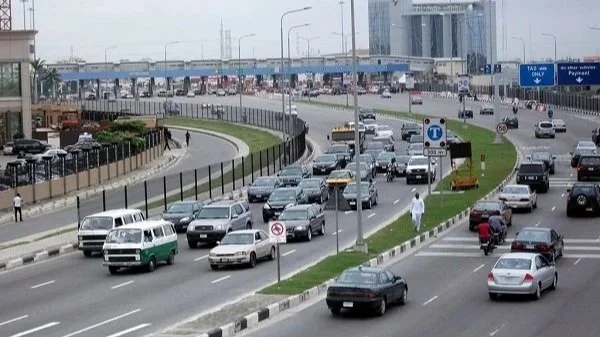
Lagos Government Tightens Transit Rules on Lekki–Epe
The Lagos State Government has affirmed that the Lekki-Epe Expressway carriageway is out of bounds for informal transport operators, implementing restrictions as part of its ongoing public transit reform for the corridor. The announcement was made on 18 February 2026 by Sola Giwa, Special Adviser on Transportation to Governor Babajide Sanwo-Olu, in a statement reinforcing enforcement of the state’s Lekki-Epe Bus Reform Scheme.
The state’s position comes after recent protests by unregulated “Korope” drivers, who briefly obstructed traffic near the Ajah axis in opposition to the regulation. Security agencies intervened to restore order, while the government restated its commitment to regulated transit operations along the expressway.
Policy Background: Bus Reform and Corridor Regulation
The exclusion of informal transport services is grounded in the Lekki-Epe Bus Reform Scheme, a regulated mass transit initiative launched in December 2025 to formalise passenger transport along the corridor. Under this policy, only operators authorised within the Bus Reform framework are permitted to operate on the main carriageway.
Lagos authorities described the corridor’s transition into a Mass Transit and Regulated Transport Corridor as deliberate, data-driven and aligned with long-term transportation and economic objectives. The state emphasised that enforcement actions are neither arbitrary nor targeted but are intended to support a safer and more efficient transit ecosystem along one of Lagos’s fastest growing commuter routes.
Informal operators affected by the directive are those not participating in the state-sanctioned scheme, which integrates transport unions, corridor stakeholders and regulatory oversight. Prior consultations, stakeholder engagements and public advisories preceded enforcement to ensure broad awareness of the policy’s requirements.
Bus Reform Scheme: Features and Implementation
The Lekki–Epe Bus Reform Scheme represents a structured approach to urban transit reform, seeking to replace unregulated minibuses with higher-capacity, certified services under formal oversight. The inaugural phase of this initiative deployed 229 high- and medium-capacity buses along major commuter routes related to the corridor.
These regulated services use cashless payment systems and QR-enabled verification tools to enhance commuter experience, safety and operational discipline. City authorities have also indicated that ageing vehicles and unregulated operations will be progressively reassigned to feeder and community routes under a First and Last Mile plan.
Strategic and Economic Significance of the Corridor
The Lekki–Epe Expressway is a key economic artery in Lagos, linking residential districts with commercial hubs, industrial clusters and strategic assets such as the Lekki Free Trade Zone and Lekki Deep Sea Port, all of which have contributed to significant traffic volume growth.
State authorities maintain that allowing only regulated transport operators on the expressway will improve traffic flow, reduce safety risks and support overall corridor efficiency. Informal operations, characterised by multiple unscheduled stops and inconsistent service standards, have historically contributed to congestion and longer travel times for commuters.
Enforcement and Road Safety
The government noted that the recent protests by informal transport operators undermined public safety and economic productivity, reaffirming that the Nigeria Police and other security agencies worked to maintain order during the incident. Authorities emphasised that enforcement will continue in line with public safety imperatives and the regulatory framework.
Transition to a Regulated Transit Corridor
The Lagos State Government’s declaration that the Lekki–Epe Expressway carriageway is closed to informal transport operators marks a significant step in the city’s broader transit reform agenda. By prioritising regulated services under the Bus Reform Scheme, the state aims to enhance corridor safety, commuter experience and transport efficiency.
Investors, transport professionals and policymakers will monitor the implementation of these measures to assess impacts on commuter behaviour, transit accessibility and the broader evolution of Lagos’s transport ecosystem. Continued stakeholder engagement and structured enforcement will be essential to achieving the policy’s objectives.
