
FG Moves to Secure $5.7 Billion in China Investments to Boost Power, Mining and Manufacturing
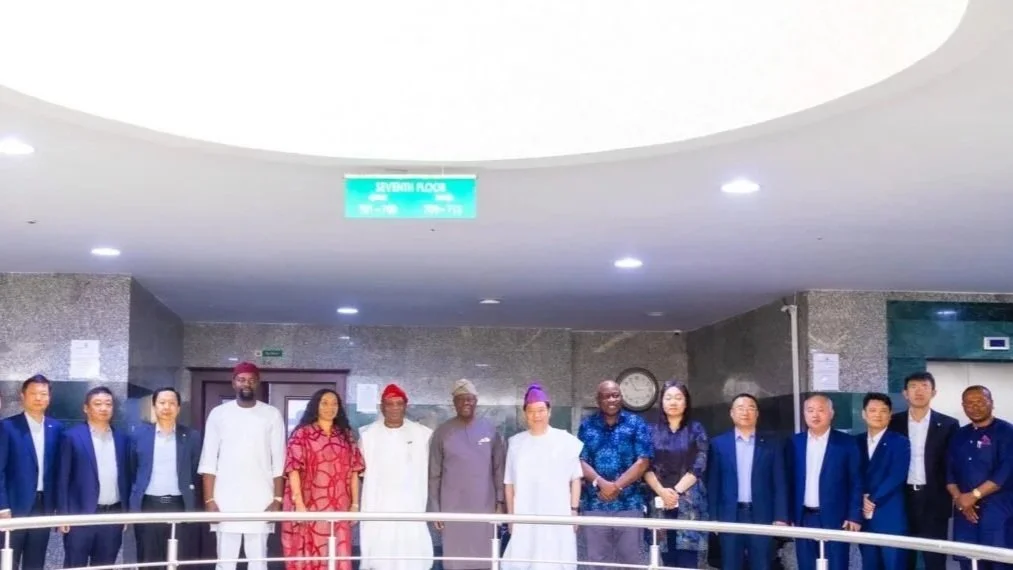
Federal Government Pursues China-Backed Capital Inflow to Strengthen Industrial Base
The Federal Government of Nigeria has initiated efforts to secure up to $5.7 billion in prospective Chinese investments aimed at strengthening key economic sectors, including power generation, mining, and industrial manufacturing, the Federal Ministry of Finance announced following a meeting with representatives of the GCL Group in Abuja. The engagement underscores Nigeria’s strategic push to attract foreign capital to support domestic production and job creation.
Strategic Talks With Chinese Investors
The talks were led by Honourable Minister of Finance and Coordinating Minister of the Economy, Wale Edun, who received a high-level delegation from China’s GCL Group, headed by Senator Orji Uzor Kalu. According to the Finance Ministry’s official announcement, the investment proposals span large-scale energy projects, expanded mineral processing facilities, and new manufacturing ventures designed to catalyse local industrial growth.
The framework for these prospective investments is aligned with ongoing economic reforms championed by President Bola Ahmed Tinubu, with authorities emphasising policy stability and regulatory clarity as drivers of investor confidence.
Sectoral Focus: Power, Mining and Manufacturing
Power Generation and Energy Security
A significant portion of the proposed investment is targeted at power infrastructure. Nigeria’s ongoing challenge with unreliable electricity supply has constrained industrial capacity and elevated production costs. Large-scale energy investments could complement existing infrastructure, including hydroelectric, thermal, and renewable projects, and help bridge chronic supply gaps that have historically undermined manufacturing competitiveness.
Mineral Processing and Value Addition
China’s proposed investments also extend to local mineral processing facilities, signalling a strategic pivot from exporting unrefined raw materials to fostering domestic value addition. By processing minerals locally, Nigeria could enhance export revenues, develop related industrial clusters, and attract downstream investment.
Industrial Manufacturing Expansion
Capital inflows into industrial manufacturing form a third key pillar of the investment plan. New factories and production facilities are expected to generate employment, increase local production of goods previously imported, and diversify the economy away from primary commodity dependence.
Economic Implications and Policy Context
Boosting Investor Confidence and Structural Reform
Nigeria’s recent engagement with Chinese investors reflects a broader strategy to attract foreign direct investment (FDI) at a time when capital inflows into the manufacturing sector have faced headwinds, even as overall capital importation rose significantly in 2025. Strengthening investor confidence has been a policy priority, especially against a backdrop of relatively weak productive sector investment.
Statements from the Finance Ministry highlight that the proposed China-linked capital would complement Nigeria’s efforts to deepen industrial capacity and transition toward export-oriented growth.
Shifting From Raw Exports to Domestic Value Addition
The focus on processing minerals and enhancing manufacturing aligns with national economic strategies aimed at improving Nigeria’s trade balance and increasing the proportion of value-added exports. Such structural shifts are considered essential to long-term sustainable growth and reducing vulnerability to commodity price fluctuations.
Outlook and Potential Next Steps
While the discussions signal strong interest from Chinese investors, formal agreements and implementation frameworks are still in progress. If realised, the proposed $5.7 billion investment could represent one of the largest foreign capital inflows into Nigeria’s industrial and energy sectors in recent years, with potential multiplier effects on jobs, technology transfer and economic diversification.
Ongoing negotiations will need to be followed by structured investment agreements, due diligence, and clear policy guarantees to ensure that capital commitments translate into on-the-ground projects that deliver measurable economic outcomes.
Nigeria’s initiative to secure up to $5.7 billion in Chinese investments reflects a proactive effort to leverage global capital for domestic economic transformation. By targeting power, mining and manufacturing, the Federal Government aims to bridge critical infrastructure gaps, increase value addition, and stimulate inclusive job creation. The success of this strategy will depend on sustained policy coherence, risk mitigation measures, and effective public–private coordination.
