
FEC Approves Six Major Road Projects to Boost Infrastructure Across Nigeria
Nigeria Moves to Upgrade Critical Highways as FEC Approves New Projects
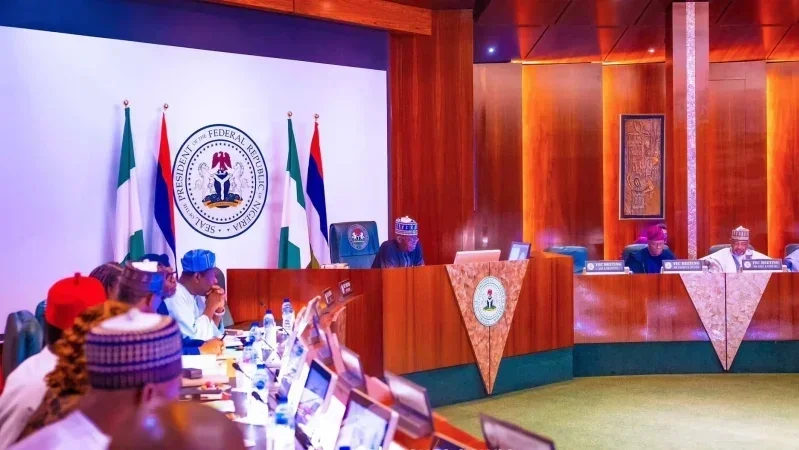
Nigeria’s Federal Executive Council (FEC) has approved six major road projects across different regions of the country as part of efforts to improve national connectivity and strengthen economic corridors. The approvals were announced by the Minister of Works, David Umahi, after a council meeting chaired by President Bola Tinubu in Abuja.
The projects include large-scale highway reconstruction and rehabilitation initiatives spanning several states and strategic transport routes.
Key Road Projects Approved
According to the Minister of Works, the approved projects cover major transportation corridors that connect key economic zones and urban centres.
The projects include:
Ibadan–Ife–Ilesa Road Reconstruction: Reconstruction of a 103-kilometre dual carriageway valued at about ₦427 billion. The project was previously awarded but showed limited progress, prompting the government to review and re-award the contract.
Kano–Kongolam Road: A 132-kilometre highway linking Kano, Jigawa, and Katsina states, redesigned into a three-lane concrete carriageway with solar-powered streetlights and CCTV installations. The contract is valued at approximately ₦334 billion.
Keffi–Nasarawa–Abaji Road (Phase Two): Rehabilitation of a 129.3-kilometre route connecting Nasarawa State to the Federal Capital Territory, costing around ₦203 billion.
Suleja–Minna Road Completion: Completion of the remaining 71 kilometres of the dual carriageway after the previous contractor was terminated due to poor performance. The project is valued at ₦91 billion.
Carter Bridge Project (Lagos): Approval of ₦5.6 billion for the detailed design and preparation for demolition and reconstruction of the ageing Carter Bridge following technical assessments that deemed rehabilitation unfeasible.
Abuja–Lokoja Road Reconstruction: Reconstruction of an 86-kilometre section of the critical corridor linking the Federal Capital Territory with northern and southern Nigeria, valued at about ₦146 billion.
Strategic Importance of the Projects
The federal government views these projects as part of a broader infrastructure agenda aimed at improving transport efficiency, regional connectivity, and economic productivity.
Key corridors such as the Abuja–Lokoja highway serve as major transit routes for goods and passengers moving between northern and southern Nigeria. Similarly, the Ibadan–Ife–Ilesa corridor supports commercial activity across the South-West and links agricultural zones to major markets.
Infrastructure analysts note that upgrading such strategic routes can significantly reduce travel time, vehicle operating costs, and logistics delays, improving supply chain efficiency across the country.
Shift Toward Durable Road Construction
The Minister of Works indicated that some projects, such as the Kano-Kongolam road, will use reinforced concrete construction instead of asphalt to improve durability and reduce long-term maintenance costs.
The redesigned corridor will also incorporate modern infrastructure elements, including solar street lighting and surveillance systems, aimed at improving road safety and security.
Infrastructure Rollout Timeline
The federal government also announced plans to accelerate infrastructure delivery across the country. According to the Minister of Works, the government intends to commission at least four road projects in each of Nigeria’s six geopolitical zones by May 15, signalling an ambitious push to expand national road infrastructure.
The approval of six major road projects by the Federal Executive Council represents another step in Nigeria’s ongoing effort to upgrade critical transport infrastructure. By targeting strategic highways and urban links across multiple regions, the projects aim to strengthen mobility, support economic activity, and improve connectivity nationwide.
Successful implementation and timely completion will be crucial to delivering the expected economic and social benefits from these multi-billion-naira investments in Nigeria’s road network
