
BUA Chairman Abdul Samad Rabiu Urges African Leaders to Prioritize Industrial Transformation
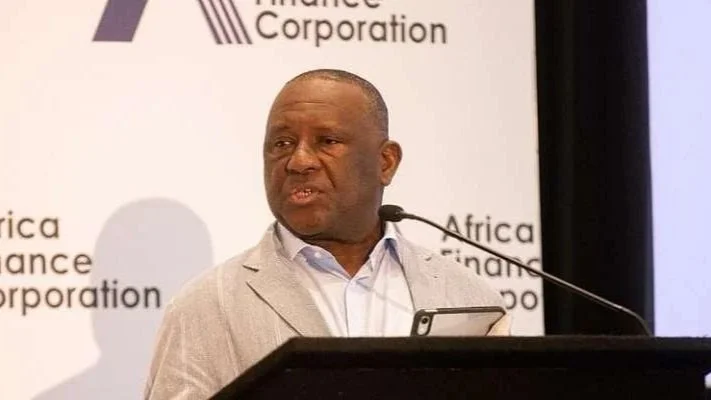
BUA Group Chairman Tasks African Governments on Local Processing and Value Addition
Alhaji Abdul Samad Rabiu, Chairman of BUA Group, has called on African governments and continental stakeholders to pivot from a raw material extraction model to large-scale industrial transformation. Speaking on Tuesday at a high-level mining forum convened by the Africa Finance Corporation (AFC) in Cape Town, South Africa, Rabiu emphasized that local processing is the key to unlocking Africa’s true economic potential and ensuring shared prosperity.
Case Study: The Nigerian Cement Success Story
Drawing from BUA Group’s 16-year journey in the mining and manufacturing sectors, Rabiu illustrated the impact of domestic production over importation. He noted that Nigeria was previously heavily reliant on cement imports despite having vast limestone reserves. This dependency forced companies to constantly seek foreign exchange (FX), exposing them to extreme currency volatility and supply chain disruptions.
“We were spending more time chasing FX than selling cement before BUA eventually made the strategic decision to invest in local cement production,” Rabiu stated. Currently, BUA mines and processes approximately 40,000 tonnes of limestone daily, yielding roughly one million tonnes of cement per month. This transition has turned Nigeria from a net importer into a net exporter of cement, saving the nation billions of dollars in foreign exchange annually.
The "Structural Paradox" of African Resources
The BUA Chairman highlighted a critical "structural paradox" where Africa, despite its immense natural wealth, remains economically disadvantaged due to a lack of processing capacity. He noted that essential minerals such as gold, platinum, cobalt, copper, and iron ore are largely exported in raw form, only for finished products to be imported back at significantly higher prices.
Rabiu cited specific examples of this imbalance:
Steel: Nigeria spends between $3 billion and $4 billion annually on steel imports despite possessing over four billion tonnes of iron ore.
Agriculture: Four African nations produce 75% of the world’s cocoa, yet the continent captures only a fraction of the $200 billion global chocolate market.
Land: Africa holds 60% of the world's arable land but continues to spend billions on food imports.
“Africa does not lack resources, but lacks processing capacity, industrial scale, and strategic execution,” he emphasized.
The Role of Patient Capital and Policy
The transformation of the industrial sector, according to Rabiu, is contingent upon access to long-term "patient capital." He credited the Africa Finance Corporation (AFC) for its pivotal role, revealing that the AFC supported BUA’s industrial operations with over $400 million in long-term financing a significant portion of which has already been repaid.
He urged development finance institutions (DFIs) to scale up support for beneficiation and industrial value chains. Furthermore, he called on African governments to implement deliberate policies that incentivize local processing while discouraging the export of raw materials where domestic capacity exists.
Alhaji Abdul Samad Rabiu’s address serves as a call to action for a fundamental shift in Africa’s economic strategy. By moving from extraction to transformation, the continent can mitigate its exposure to global market shocks and create sustainable jobs for its growing population. As the BUA Group continues to expand its industrial footprint, the focus remains on proving that African industrial projects are not only bankable but are the essential foundation for the continent's long-term economic independence.
